
Farrier Dylan Kirk advises on how to prepare your horse for hard ground in summer
- kirstenmbinnie
- May 2
- 5 min read
FARRIER Dylan Kirk will be writing regularly for The Equine Times, sharing is extensive knowledge of shoeing, whether you horse has the best feet or is compromised in its conformation or soundness. He can help to ensure your equine friend, regardless of whether they compete or not, has the best possible care in between shoeing cycles by offering expert advice on how to deal with ailments and weather conditions.
In this first article, Dylan is covering how the owner can help their horse cope with dry and hard ground in summer and advise on routines to establish to help the horse adjust as the season changes from wet weather to dry.

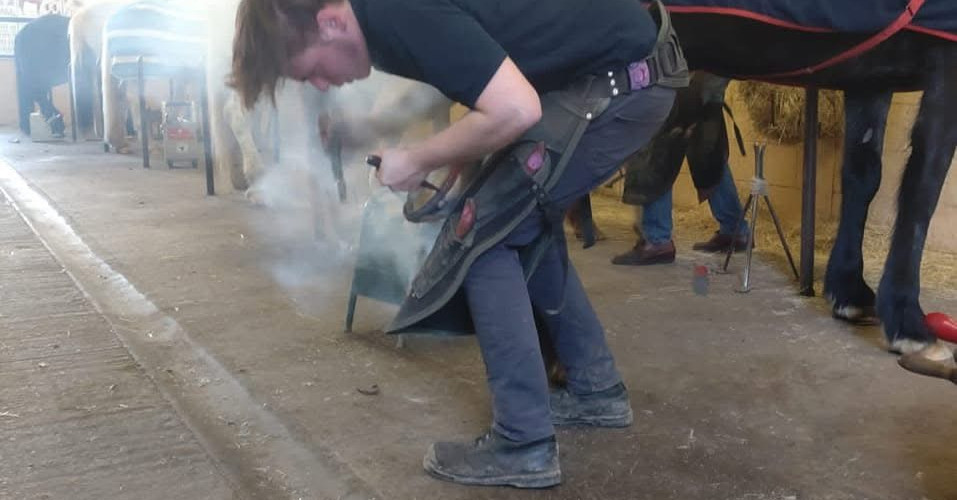
Summertime hoofcare - survival or success?
As equestrians quickly forget the horrors of winter and look forward to the summer, new footcare challenges emerge.
During the changing seasons our horses feet depend on a fine balance between environmental changes, moisture levels, appropriate foot care cycles and the day-to-day maintenance of countless other factors.
Cutting through complex anatomical structures, fashions and the reality of owning horses around our busy lives can be difficult, so here are some of my top tips to help combat challenging foot care during one of the busiest and most difficult times of the year.
Moisturising myth-busting
Many brands offer moisturising products with a wide range of advertised benefits, but how many actually work?
There hasn’t been a huge amount of scientific research done but what is out there is evidence that a hoofcare product alone isn’t going to change the moisture level of a hoof.
"The ideal moisture level is around 25%," - says farrier Dylan Kirk
Oils, balms, grease and creams are all available but the main focus is getting a moisture level close to the ideal and holding it there. Horses feet do not respond well to rapid changes in environment - wet, dry, dusty and then back to wet etc is too much of a shock for the hoof to respond well to.
How to correctly moisturise your horse's feet - it doesn’t take forever, it isn’t another chore and should be part of your daily care routine just as much as a rug change, fly mask and fly spray should be.
It’s simple ... clean hooves in the summer don’t need brushing off, simply use a hose or spray bottle and cover the outer hoof wall with a quick covering of water. Change a rug, apply fly spray ... whatever you need to do and just before turning out or putting back in the stable, cover the hoof wall in your chosen oil, balm etc.


Silverfeet hoof dressing.
My top picks are, 'Silverfeet balm', 'Kevin Bacon's grease' or - just as good - Vaseline! It is available in quantity, cheaply and is doing virtually the same thing as a £20 specialist foot product.
Many of the available products' biggest ingredient is veg oil, pig fat or a petroleum jelly like Vaseline.
This is not just a summer guide, this is great in the winter too, giving the foot some moisture content but protecting the foot from absorbing too much moisture in the wet weather. As a farrier who has worked in one of Britain's hottest villages on the south coast with temperatures often over 30 degrees, the difference in hoof quality and 'give' or resilience to outside trauma is incredible.
We saw small chips, broken feet, sharp grass cracks and tough flares greatly reduced with small daily efforts from clients.

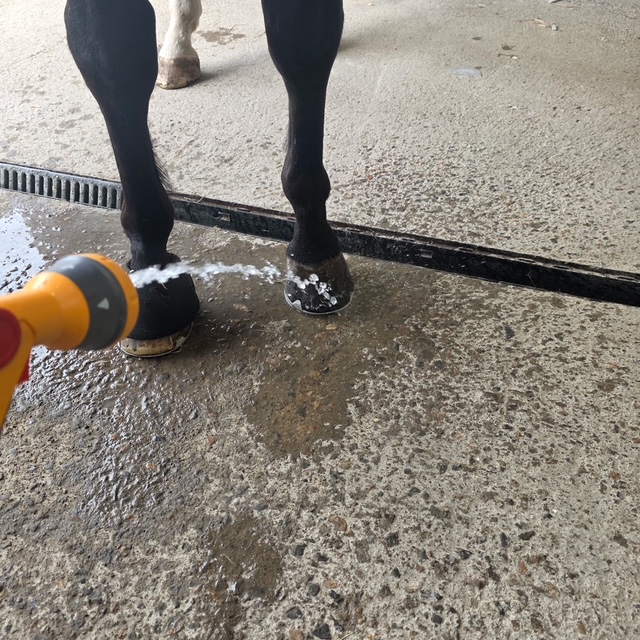
Hosing the foot with with water helps to moisturise.
Without going into great anatomical detail, the hoof has to have natural flex to reduce concussion, aid blood return and give the horse optimal performance. If the foot is as hard as a stone its natural function will be reduced. Think of squeezing a tennis ball or a stone - which would you rather have on the end of your leg?
Trimming or shoeing cycles are definitely worth revisiting, 6/8 week cycles may work in the winter but in the summer 4-6 week cycles may be the best for your horse's health. Ask your hoofcare provider for their opinion on what’s best for your individual horse.
The common hoof issues we’ve seen so far:
Coming out of another wet and muddy winter many horses feet have been worn short at the toe, and any sole that the foot would have held onto as healthy exfoliation has been washed away as well as the natural shedding of frogs at this time of year.
Many ridden horses, especially the warmer blooded slightly weaker footed types, have come out of winter with washed out and compromised feet. Now the ground is hardening up, many horses are feeling the hard and uneven ground.
There are a number of pad and packing combinations that can protect compromised feet. It is best to speak to your farrier to see what they offer and recommend for your horse.
Here are just a small few that are available:
Leather pads - natural leather pads protect the sole and frog and also breathe. Keeping sweaty frogs healthier sometimes without extra treatment, in my experience sole and frogs look better when using leather pads compared to a synthetic pad. They generally can be refitted once. A wide and varied selection of packings can also be used, we will cover these shortly.

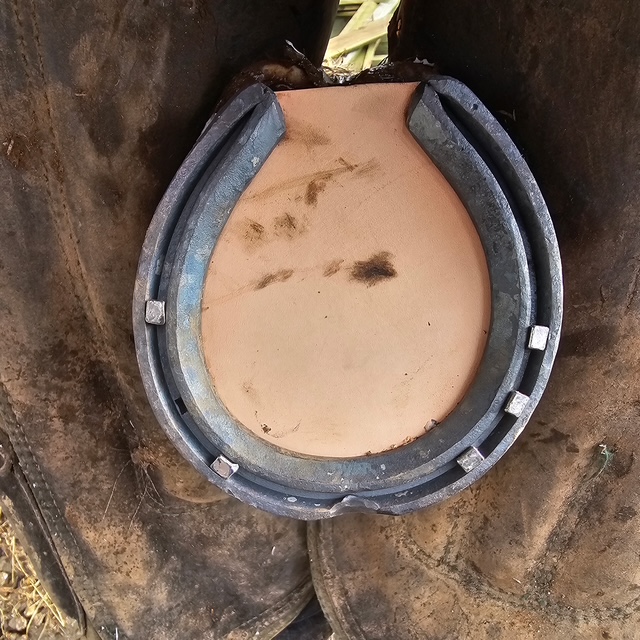
A leather pad.
Synthetic and frog support pads - made from plastic and varying in hardness. Synthetic pads offer varied levels of protection and adjustment and can often last longer than leather pads helping to spread costs.

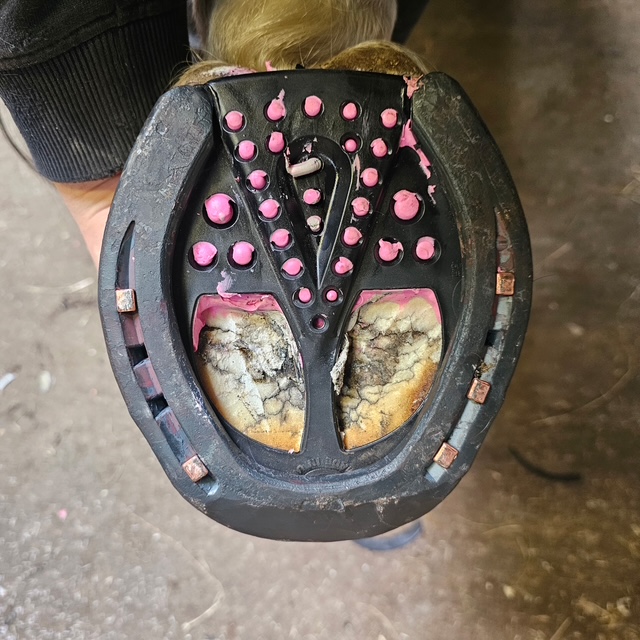
Frog support pad with impression material.

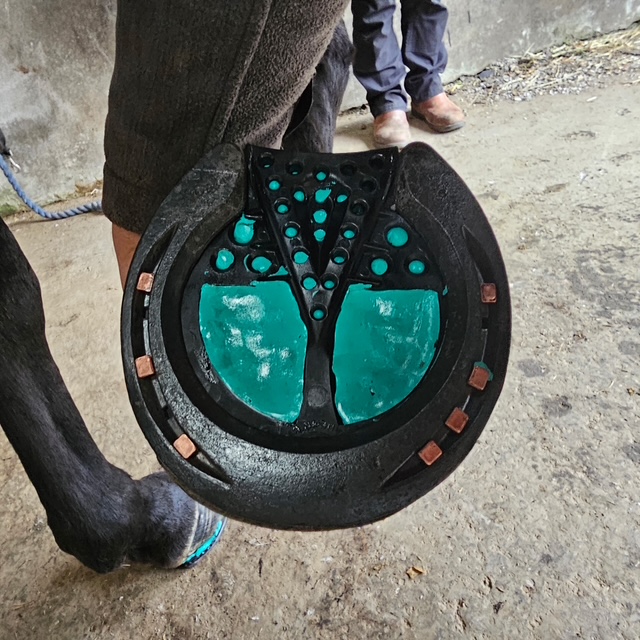
Frog support pad with antibacterial packing.
For feet and limbs that need extra support, a frog support pad may be used. These support the column of bones and offload pressure from the wall and the pressure of conformational abnormalities by activating the frog and back half of the foot.
With use of the pads and impression material (often the vibrant coloured squishy rubber mix that is available in various firmness ratings) gives anti-concussive and loading properties. One downside of synthetic pads is they prevent the foot from breathing, so a topical application on the frog is often required to stop thrush or a build up of sweat. They can typically be refitted twice totalling three shoeing cycles.

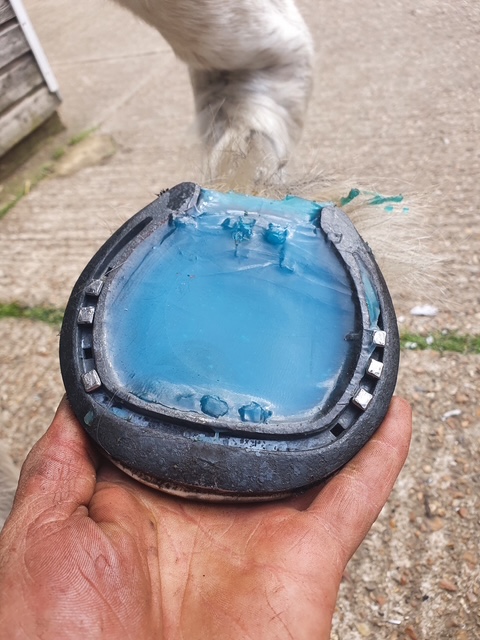
Pour-in anti-bacterial pad.
As well as impression material, a more natural blend of shredded leather and natural oils called magic cushion helps reduce inflammation and concussion as well as leaving frogs healthy, this is generally used in conjunction with flat leather or plastic pads.

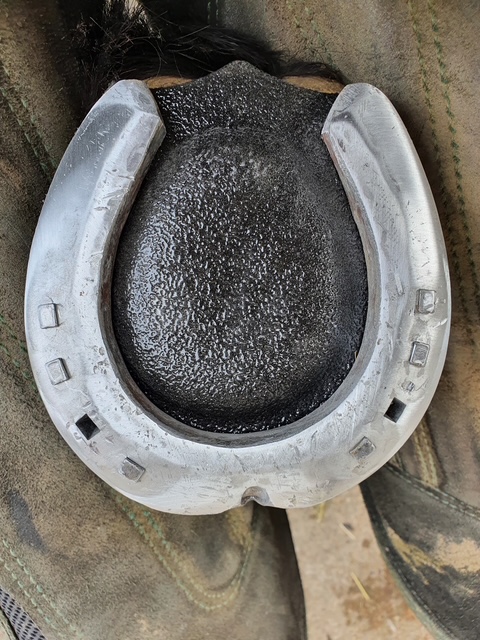
Gel filled anti concussive pad with a lightweight aluminium shoe.
Pour in pads - one of the most effective forms of sole protection, a pour in pad is pumped onto the sole over mesh to hold it in place, however it is a costly and one time application. This is a good option for horses requiring protection such as eventers and endurance horses. There can be an effect on synthetic arena surfaces so it is best to talk to your farrier for their advice.
I would like to thank Kirsten for the opportunity to share some off my knowledge and I hope it serves you and your horses well in the years to come.
And remember no foot ... no horse.
Dylan Kirk DipWCF registered farrier. Contact: 07983536020.


Comments